What to do when a legal matter starts to move off plan

A matter doesn’t suddenly go off plan in a way that’s obvious to everyone involved. There isn’t a clear point where things stop making sense or where someone can say, “this is where it changed.”
Instead, the movement is gradual. Decisions are made as the work unfolds. An assumption proves incomplete. A different approach is used. A timeline extends. Each step makes sense on its own.
But over time, those decisions start to change how the work is delivered. And the outcome changes with it.
This is where it gets complicated. By the time the impact becomes obvious, there’s very little left to influence. The difficulty is knowing what that change actually means while the work is still in progress.
Key takeaways:
|
What matters is not that work changes. It’s how you interpret it
Most teams can see when a matter starts to move.
The harder part is deciding what that movement represents while the work is still in progress.
- Is it still within the bounds of what was expected at the outset?
- Is it a reasonable response to something new?
- Or is it starting to move in a way that no longer reflects what was agreed?
This can be hard to do. There is usually a rationale behind what is happening and a reason to continue along the same path. But without stepping back and assessing what those decisions add up to, very different situations start to look similar.
As a result, normal progress can be over-managed. More significant changes pass without challenge. And the financial impact only becomes obvious once it is already embedded in the outcome.
What tends to make the difference is how that movement is read at the time. And the teams that manage this well tend to approach it more structurally.
↪Further reading: Why legal spend predictability breaks down (and what to do instead)

How to classify legal spend management changes during delivery
Once a matter starts to move, the focus moves to understanding what kind of change you’re looking at. Because some changes stay within what was agreed, while others start to affect cost, scope, or delivery.
Here are three situations that tend to come up.
1. Expected movement
This is where the work is developing, but still within the assumptions set at the outset. There may be some variation in how the work is delivered, but it still aligns with the original scope, staffing, and timeline. The commercial position remains consistent with what was agreed.
In this case, there is nothing to correct. The role here is to stay close enough to the work to keep that alignment, rather than stepping in unnecessarily.
2. Justified change
New information comes to light. The level of complexity becomes clearer. The work adjusts in response. That change may be entirely appropriate. But it does alter how the matter is being delivered, and usually affects cost, timing, or both.
So instead, the focus needs to be on making that change explicit and agreeing on how to proceed. That might involve revisiting what is being asked, adjusting how the work is being carried out, or resetting expectations on cost. Handled early, this is manageable. Left unaddressed, it tends to compound.
3. Uncontrolled drift
This is where the work is no longer clearly anchored to what was agreed at the outset. Changes have accumulated without being clearly acknowledged or addressed. It becomes harder to explain how the current approach links back to the original scope, staffing, or cost.
At this point, no single decision stands out. But the position has moved. This is where a more direct intervention is needed. The aim is to re-establish a clear link between what is being done and what was expected, before the outcome is fully set.
What tends to separate high-performing teams is how quickly they can place what they’re seeing into one of these categories and respond accordingly.
Why this is often missed (even in well-run teams)
These changes rarely show up as anything explicitly financial.
You see them in day-to-day delivery decisions. Who is doing the work. How issues are being handled. How far the analysis goes.
Movement away from the original plan usually shows up in a few areas:
- Resourcing
More senior involvement than originally planned. Additional expertise is brought in as the work develops. - Legal judgement
The work goes further than initially expected. More time is spent testing positions or exploring alternatives. - Risk management
Additional layers of review. A higher level of scrutiny as the stakes become clearer.
There is usually a good reason for each of these decisions. They are made to deal with what is in front of the team at that point in time. And that is why they are rarely challenged.
But they do have an impact. Changes in who is doing the work, how it is approached, and how much review is required all affect cost. And those effects build as the matter progresses.
By the time that shows up clearly in financial terms, it is usually already embedded in the outcome.

What to do when a matter starts to move off plan
Most teams don’t miss the point where a matter starts to change. Where things tend to break down is in the response. The work continues, decisions are made, and the position adjusts without a clear call on whether it still reflects what was agreed.
The teams that manage this well treat that moment differently. They step in early, make the change explicit, and decide whether to continue on the same basis or reset expectations.
A few principles tend to guide that:
Reconnect to the original expectation
Start with what was agreed at the outset. The defined scope, the planned staffing, and the expected cost. Then compare that to what is happening now, such as where senior involvement has increased, where additional work has been introduced, or where timelines have extended, the gap becomes clear.
Make the movement explicit early
Changes in staffing, scope, or level of review are usually visible before they are discussed. Leaving them unspoken allows them to become embedded in how the work is carried out. Raising them early keeps the commercial position open. It allows both sides to decide whether to continue on the same basis or make an adjustment.
Test whether the response matches the issue
Not every new issue requires a change in staffing or a deeper level of analysis. But this is where cost often starts to move. More senior time is added. Additional work is carried out. Further review is introduced.
Each of these decisions may be justified. Combined, they can change the total cost significantly.
Reset expectations where needed
There are points where the original scope, staffing, or cost assumptions no longer reflect the work being carried out. This is where many teams hesitate. The matter is already underway, and continuing can feel easier than reopening the discussion.
But this is also where control is retained. Resetting scope, approach, or cost at this point keeps the work aligned with what is actually being delivered.
Stay engaged as the matter progresses
One conversation is rarely enough. As the work develops, further decisions are made about staffing, scope, and level of review. Each of these has an impact on cost.
The teams that manage this well remain involved throughout, rather than stepping back after the first discussion.
↪Further reading: Matter management: Best practices for legal teams
What changes when teams respond earlier
Responding earlier does more than reduce cost variance. It changes how legal work is managed.
We’ve taken a bunch of steps to improve control at the start and end of a matter. But it’s not enough, and we need to do more in the middle, where decisions are still being made.
When teams step in earlier, a few things start to look different:
- Fewer late-stage surprises
Changes in scope, staffing, or level of review are dealt with while the work is still ongoing, rather than appearing for the first time at the invoice stage. - Better alignment between legal and finance
Cost reflects what is actually being delivered, rather than what was originally assumed. Finance teams are not left working backwards to understand what changed. - More predictable outcomes
Decisions that affect cost are surfaced and discussed as they happen. That reduces the gap between what was expected and what is ultimately delivered. - Stronger, more transparent firm relationships
Conversations about scope, staffing, and cost happen as the work develops. That tends to lead to clearer expectations on both sides and fewer points of friction later.
And all this comes down to staying close to the work and being willing to step in when it no longer reflects what was agreed.
Connecting expectation to execution with legal spend management software
Up to this point, this has been about how work is scoped, how it is delivered, and how it is managed as it progresses. But the gap for most teams sits between those stages. And this is where a more integrated approach makes a big difference.
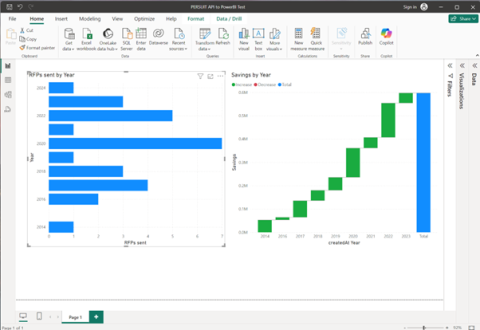
Within our legal spend management software, scope, pricing, and staffing are agreed based on how the work is expected to be delivered, and that same position remains visible as the work progresses. How the work is actually staffed. How cost is building. How delivery compares to what was originally agreed.
This creates a continuous view from expectation through to delivery.
And this allows teams to:
- See movement as it happens
Changes in scope, staffing, or level of review are visible while the work is ongoing, rather than after the fact. - Understand the financial impact at the same time
The cost implications of those changes are clear as they develop, not reconstructed later. - Respond while outcomes are still flexible
There is still time to discuss, challenge, or reset expectations before those changes are fully embedded.
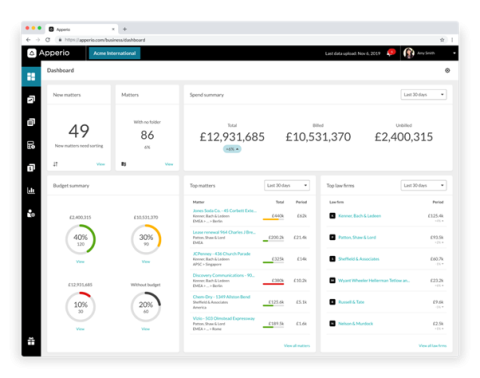
Which bring us back to the earlier point. Having that level of visibility and context makes it much easier to determine what you are looking at. Whether the work is progressing as expected, adjusting for a reason, or moving away from what was agreed.
And that is what allows teams to act with confidence, rather than relying on hindsight once the outcome is already fixed.
Control is determined in the middle of a matter
Most legal processes are well defined at the beginning and the end. But the outcome is determined in between, while the work is still being carried out.
Work will always evolve as it progresses. That is expected. What’s key to legal spend management control is picking up on that change early enough to influence what happens next. That is why the teams that manage this well do not wait until the end to understand what has happened.
They stay close to the work as it is being delivered, and act while there is still time to influence the outcome.
If you want to see this in your own data, we can help. Our solution gives you visibility into how work is delivered against what was agreed, so you can identify changes early and respond while there is still time to influence the outcome. Get in touch.
Author:

Dominic Aelberry
CEO